Lanzarote is 60km from tip to tip. You can drive across the whole island in under an hour. And yet, this is an island where transport shapes your entire trip, because almost everything you've come to see is exactly where the guagua (local word for bus) doesn't go.
This guide gets straight to the point: whether you need a car or not, how much each option costs, what public transport actually covers — and what it doesn't — plus the warnings nobody gives you until you're already on the hard shoulder with a blown tyre.
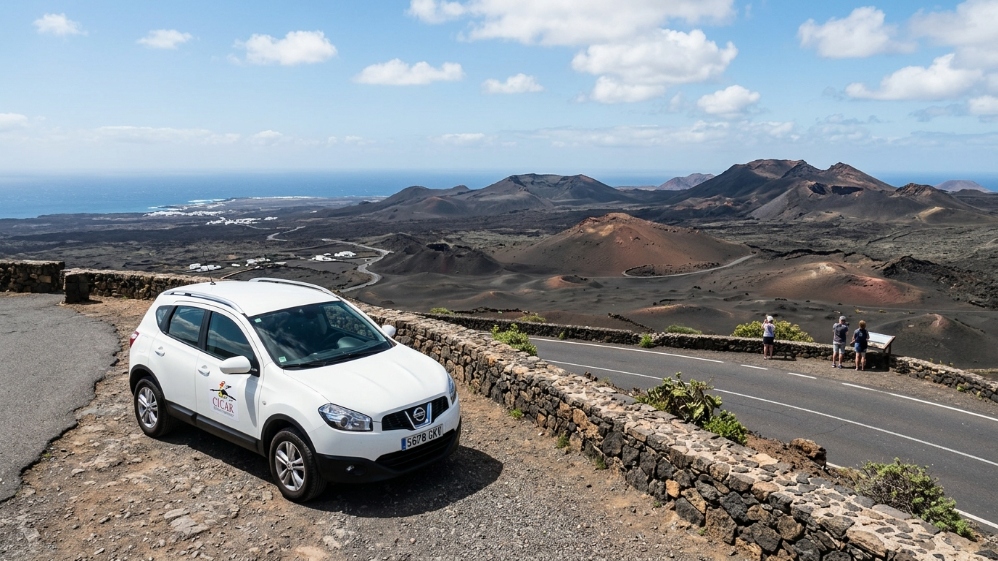
with a car, you see 100% of the island. Without a car, you see the tourist towns, a beach or two, and not much else, unless you book excursions. If you're staying 3 days or more, hire one.
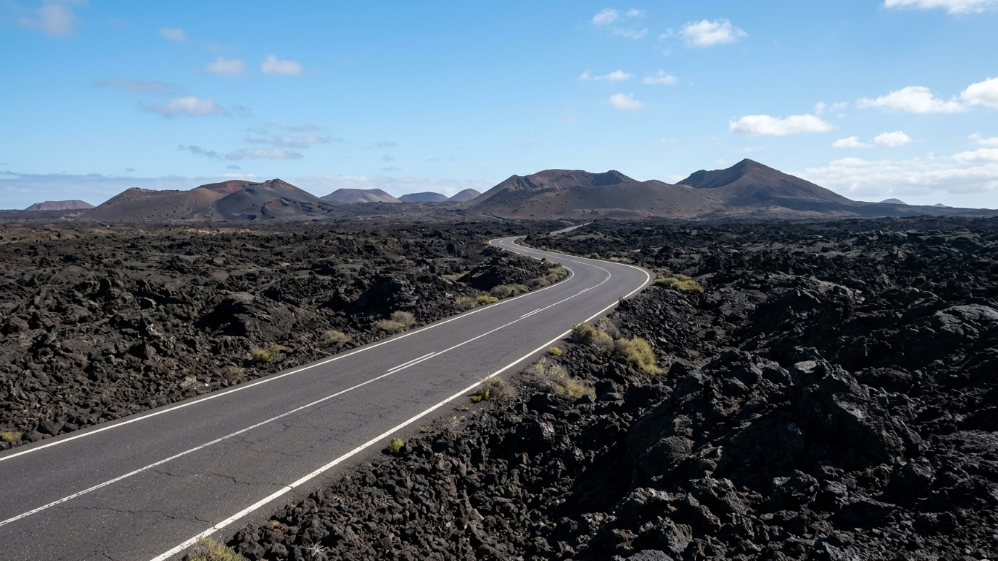
What the guagua DOESN'T cover (read this before you decide)
This is the detail that changes the decision, and almost nowhere spells it out this clearly. Public transport doesn't reach:
- Timanfaya National Park — there's no stop inside the park
- La Geria and its wineries
- Mirador del Río
- Jardín de Cactus and Fundación César Manrique
- Papagayo beaches
- Famara beach (there's a route to Caleta de Famara, but services are infrequent)
- El Golfo, Los Hervideros, Salinas de Janubio
- Caldera Blanca, El Cuervo volcano, and practically every hiking trail
In other words: pretty much the entire list of reasons you came to Lanzarote. The guagua network connects locals and people moving between tourist towns perfectly well. It's just not designed for sightseeing round the island — and that's fine, that's simply not its job.
Option 1: car hire (what we recommend)
around €30–45 a day in mid-season, quite a bit less if you book two or three weeks ahead. It's one of the cheapest destinations in Spain for car hire.
almost all the rental desks are at the airport (ACE). Some companies have branches in Puerto del Carmen, Costa Teguise or Playa Blanca, but with a smaller fleet and shorter opening hours.
your licence and, almost always, a credit card in the driver's name for a security deposit hold that can run to €800–1,500. With a debit card, many companies simply won't rent to you. Check this before you book: it's the classic desk-side disappointment.
this is one place where fully comprehensive with no excess is genuinely worth it. Not because of accidents, but because of scratches: the tracks to Papagayo, to Janubio, or to many trailheads are dirt tracks covered in picón (volcanic gravel), and the side of your car pays the price.
go small. The streets of Teguise, Haría or Arrecife's old town weren't built for an SUV, and you don't need horsepower for anything here.
Driving in Lanzarote: easy, with a few caveats
- The roads are good. The LZ-2 runs across the south (Arrecife–Yaiza–Playa Blanca) and the LZ-1 heads up north. No tolls.
- Lots of roundabouts and low speed limits. Driving here is relaxed. There are speed cameras.
- The wind. The trade wind (alisios) blows hard, especially up in the high ground and in Famara. Keep a firm grip on the wheel and be careful opening the car door: it rips more than one off its hinges every season.
- Calima and mist. On calima (Saharan dust haze) days, visibility drops and your car ends up covered in dust. In the north, mist can blot out the whole view from Mirador del Río.
- Parking is free almost everywhere, except Arrecife's centre and parts of Puerto del Carmen. At Timanfaya, parking is included in the entrance ticket.
- Fill up before heading north. Petrol stations are in Arrecife, Puerto del Carmen, Tías, Tinajo, Yaiza and Haría; between them, there's plenty of scenery and not a single pump. Fuel, mind you, is noticeably cheaper than on the Spanish mainland.
- Dirt tracks: take it slow, and check whether your insurance actually covers them. Some contracts expressly exclude unpaved roads.
- Zero alcohol if you're driving. We mention it because this is volcanic wine country: if you're doing the winery rounds, someone has to skip the tasting. Full guide: La Geria's wineries and wines »
Option 2: guaguas (buses)
In the Canaries, the bus is called a guagua (pronounced "wawa"). The network is run by Arrecife Bus, under the brand IntercityBus.
What it does well:
- The Arrecife – Puerto del Carmen – Playa Blanca route, with good daytime frequency.
- Arrecife – Costa Teguise.
- Airport – Arrecife: about 15 minutes and around €1.50. Unbeatable.
- Airport – Puerto del Carmen – Playa Blanca (route 161): around €3.30 and 50–70 minutes.
- Arrecife – Tahíche – Haría – Órzola: the key route if you're heading to La Graciosa. But careful, services drop to one guagua every hour or two here: plan your return with plenty of margin.
- Special Sunday services to the Teguise market, from several tourist spots. One of the few excursions the guagua genuinely sorts out for you.
a single ticket ranges, roughly, from €1.50 to €4, depending on distance. There's a rechargeable Bono card that noticeably cuts the cost of each trip; if you're getting the guagua several days running, it pays for itself. You can buy one at the Arrecife bus station or on most guaguas.
the official website is arrecifebus.com, and they have their own app with real-time updates. Moovit works well too. Don't trust the timetables copied by blogs (ours included): routes and numbers change. Check the official source the day before.
Carry some cash. Card payment works on most routes, but don't rely on it 100%.
Option 3: taxi (and what you won't find)
There's no Uber or Cabify in Lanzarote. It's the first thing everyone asks, and the answer is no.
What does work is Free Now, and only in the main areas: Arrecife, Puerto del Carmen, Costa Teguise and Playa Blanca. Outside those — inland, Haría, Famara, the north — the real solution is to call a local taxi rank or arrange the trip in advance.
A taxi is perfect for a one-off trip: from the airport to your hotel with the luggage, or a dinner where nobody wants to drive. As a way of touring the island, though, it's eye-wateringly expensive.
Option 4: organised excursions (the solution if you're not driving)
If you've decided not to drive — or you're planning on tasting wine, which is a perfectly legitimate reason — organised excursions are the only practical way to reach the highlights. They usually include hotel pick-up, entry tickets and a guide, and they're especially useful for:
- Timanfaya, which now also requires an online booking with a set time slot: the tour sorts that out for you. Full guide: how to visit Timanfaya »
- The combined Timanfaya + Jameos del Agua + Cueva de los Verdes tours.
- Winery routes with tastings, without a designated driver.
It's not the most freewheeling way to see Lanzarote, but it beats missing out on it altogether.
And the other ways to get around
- Ferry to La Graciosa: departs from Órzola, about 25 minutes. You can get the guagua as far as Órzola, but watch the return frequencies. La Graciosa in a day »
- Ferry to Fuerteventura: from Playa Blanca to Corralejo, about 25–35 minutes. A perfectly doable day trip.
- Bike: Lanzarote is a serious cycling destination (you'll pass pelotons every day). But it's for those who come specifically for that: there's elevation, sun and wind to contend with. On La Graciosa, though, the bike is the way to get around.
- On foot: fine within any given town or resort. Between them, forget it.
So, how much car do I actually need?
Your trip What we recommend
Layover or 1 dayGuagua + taxi. Not worth the paperwork.Weekend in a resort townLocal guagua + 1 organised excursion.3 days or moreGet a car, no question. It's what unlocks the island.A weekCar every day. While you're at it, do it properly.Wine tasting dailyCar + designated driver, or tours.
FAQs
Can you see Lanzarote without a car?
Do I need to book the car hire in advance?
Do you need a credit card to hire a car?
Is driving in Lanzarote difficult?
Is there Uber in Lanzarote?
How much does the guagua cost?
How long does it take to cross the island?
The lovely thing about Lanzarote is that distance basically doesn't exist: in a single day you can go from the fire of Timanfaya to the palm trees of Haría to a turquoise cove. But that only happens if you can stop wherever you want, whenever you want, at that viewpoint that wasn't in any guidebook. That's why, here, a car isn't a convenience. It's the trip itself.
And once you've got the keys, the other big decision is where you set off from each morning: sleeping in the right spot saves you kilometres every single day. We cover that in the guide to Lanzarote's areas for where to stay.