In January, Munich sits at 2°C. London, 6°C. Madrid, 9°C.
Lanzarote, 21°C.
And that's not a lucky one-off: it's the average. Winter here means throwing on a light jacket at night and shrugging it off by eleven in the morning. So while half of Europe wraps up in coats, this island fills up with people in T-shirts.
This piece is about exactly that: why winter is probably the best time to see Lanzarote — and what nobody tells you about it.
 First, the paradox
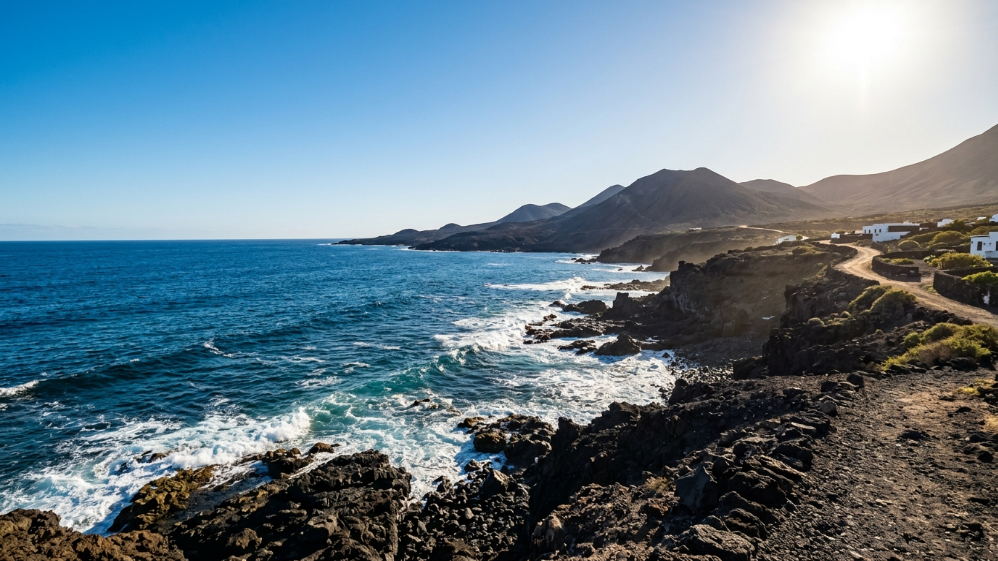
Here, winter is high season. The exact opposite of mainland Spain.
From December to March, the island fills up with Germans, Brits, Irish and Scandinavians who haven't come for the beach: they've come for the sun on their skin. Lanzarote isn't a summer destination that happens to survive winter. It's a winter destination that also happens to have a summer.
So watch out for the phrase "low season": it doesn't mean cheap. It means a different kind of trip.
The six real reasons
1. The climate isn't a sales pitch, it's a fact
21°C average high in January, 14°C low. It barely rains, and when it does, it's brief showers that pass quickly. Between the coldest and warmest month of the year there's a gap of seven degrees. Seven.
2. It's THE season for walking
And this is the big one. In summer, hiking here is a bad idea: there's no shade, the black rock throws the heat straight back at you, and the sun beats down vertically.
In winter, everything changes. Caldera Blanca, the El Cuervo volcano, Los Ajaches down to Papagayo, the Risco de Famara cliffs: 18-20°C, clear skies and a sea of lava all to yourself. People who visit in August never see this island. They see the beach.
3. Volcanoes without the queues
Timanfaya in August means time slots booked out days in advance. Timanfaya in January means walking in whenever you fancy. Same goes for the Jameos, the Cueva de los Verdes and the Mirador del Río.
Seeing Manrique's work with no crowds in front of you is, quite literally, a different visit altogether.
4. The light
Photographers know this: the low winter sun is what makes the red of the Fire Mountains blaze, the green of the Charco de los Clicos pop, and Janubio look almost painted on. In summer, at midday, all of that comes out flat.
And the days are short: sunset catches you awake, not mid-dinner.
5. The countryside comes alive
January is when the vines get pruned in La Geria and San Antonio Abad is celebrated, the big countryside festival of Lanzarote. In February, Carnival arrives, and in Arrecife and Puerto del Carmen it's one of the biggest in the Canaries.
And if there's been a bit of rain, something happens that nobody associates with this island: the malpaís (lava badlands) turns green. It doesn't last long, and it's one of the strangest, most beautiful things you can witness here.
6. The sky
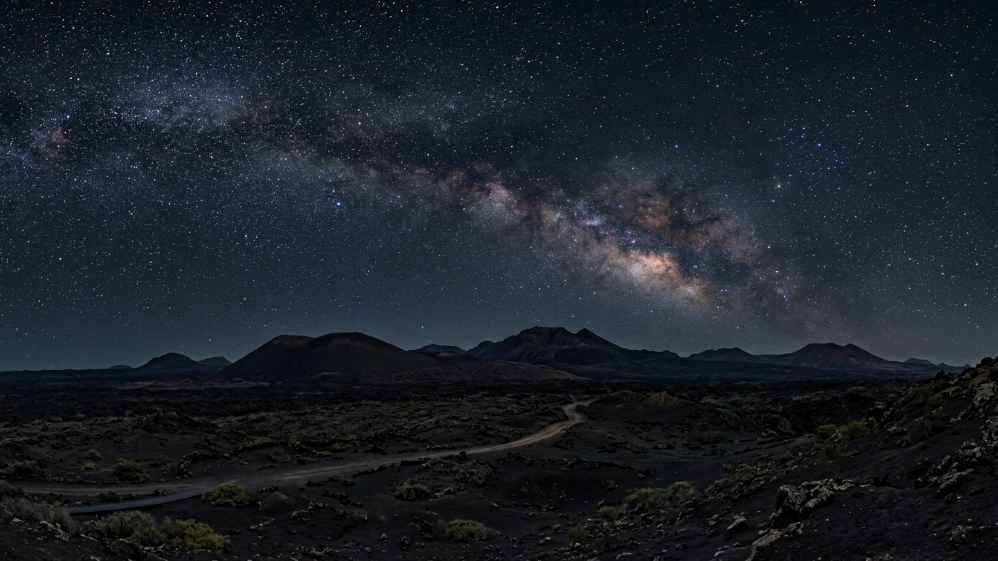
Long nights, dry air and barely any artificial light — thank Manrique for the lack of billboards and excess streetlights here. The winter sky inland is something else entirely. Drive out of Yaiza or Tinajo, kill the engine, and look up.
 And now, what nobody tells you
Because an article that only sells you the dream is worth nothing:
- The sea sits at 18-19°C. You can swim — you'll spot foreign tourists doing it every day — but you'll pull a face going in. If you've come to swim, come in September or October instead.
- It's windy. The trade wind (alisio) is gentler than in summer, but up north and in Famara it's still blowing.
- Days are short. It gets dark early: fewer daylight hours to squeeze the most out of.
- The north clouds over. This is when haze is most likely: the Mirador del Río might just give you a white wall instead of a view. Have a backup plan.
- And it isn't cheap at Christmas. From 20 December to 7 January, and in February, prices go through the roof: that's when all of Europe shows up.
So, which weeks exactly?
When What to expect
November🏆 The hidden gem. Sea still warm (~22°C), 24°C by day, low prices, few crowds.December (1st-19th)A great option. Sun, calm, and still ahead of the rush.Christmas and Three KingsGorgeous… and pricey. Book months ahead.January (after Three Kings)🏆 The other gem. The island empties out, prices drop, and the sun's just as good.FebruaryEuropean high season plus Carnival. Packed.MarchDays grow longer, the sea warms up. Excellent for walking.
Our recommendation: November, or January once Three Kings is over. Same sunshine, half the island, half the price.
What to pack
You don't need a coat, but don't come dressed for August either:
- A light jacket or windbreaker — for the evenings and for the viewpoints.
- Long sleeves for walking. And sunscreen: the January sun still burns just the same, and the breeze fools you into not noticing.
- Hiking shoes if you're heading onto the malpaís. Definitely here.
- Swimwear, yes. Even if it's only to look at the sea and decide against it.
FAQs
Is it worth visiting Lanzarote in winter?
Is it cold in Lanzarote in winter?
Does it rain a lot?
Can you swim in winter?
Is it cheaper in winter?
Is everything open?
What do I do if I get haze or calima (Saharan dust haze)?
There's a photo that repeats itself every January on this island: someone sipping a beer in short sleeves on a terrace, looking out at the Atlantic, while their phone fills up with pictures of their snowed-in street back home.
That's Lanzarote in winter. Four hours by plane, same time zone, same currency, no jabs or visas needed. Europe's one spot where December doesn't feel like December.