For almost 450 years, this was the capital of Lanzarote. And not just that: it was the very first capital of the whole Canary Islands, back when the entire archipelago fitted into a handful of stone houses and a mountain from which lookouts scanned the horizon.
It was also the most raided town in the Atlantic. Barbary pirates and European corsairs came for it again and again: they'd steal the livestock, burn down the church and carry off the people to sell as slaves. That's why Teguise was built inland, hidden from the sea. And that's why, beneath its whitewashed streets, there are still tunnels.
Today it's the prettiest town in Lanzarote, and on Sundays it turns into the island's most famous market. This guide covers what to see in Teguise, the history behind it, and how to do the market without ending up hating it.
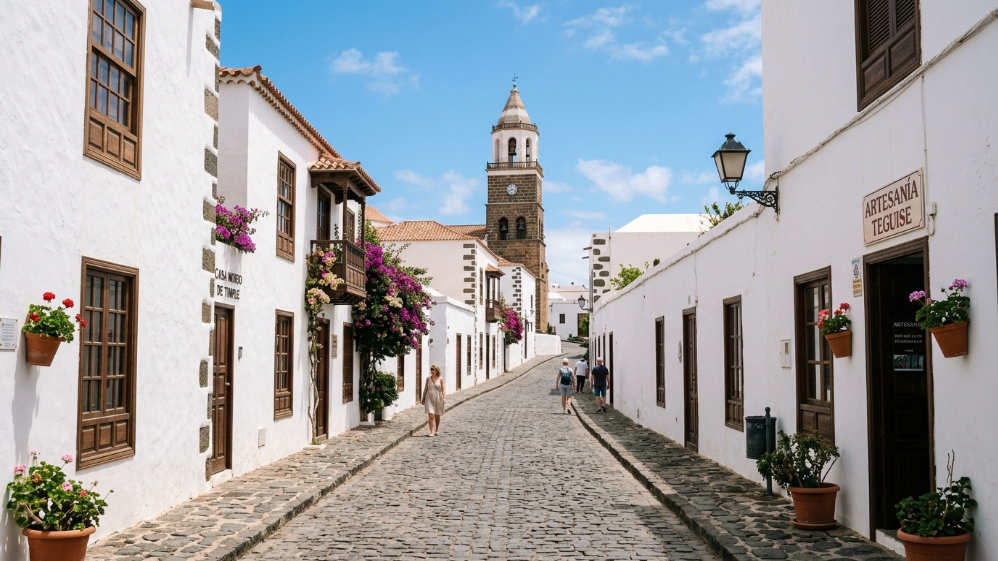
The history, in three minutes (and it's worth it)
In the early 15th century, when Europeans first arrived in Lanzarote, the island had already been inhabited for centuries by the majos (the indigenous population). It was ruled from here by Guadarfía, their last chief.
And here's the detail almost nobody tells you: Teguise is named after a majo woman. Teguise was Guadarfía's daughter, and she married Maciot de Béthencourt, nephew of the Norman conqueror. The town carries the name of the indigenous princess. The name of the conquered, in the capital of the conquerors.
Teguise remained the capital until 1852, when the title passed to Arrecife — the port could handle what the inland town couldn't: ships, trade, the modern world. And that's when Teguise froze in time. Which is why it's still standing today: it stopped mattering just in time.
What to see in Teguise
The historic old town
You can see it on foot in a good hour. Cobbled streets, whitewashed houses, wooden doorways and a silence that feels odd for a tourist island. Plaza de la Constitución is the heart of it, with the Iglesia de Nuestra Señora de Guadalupe presiding over it — burnt down by pirates more than once and rebuilt just as many times.
Around it: Palacio Spínola (18th century, the noble house par excellence), Casa de la Cilla, Convento de San Francisco and Convento de Santo Domingo, now home to exhibition halls and museums. It all fits into four blocks.
El Callejón de la Sangre (Blood Alley)
A narrow little alley with a name that says it all. Tradition has it that blood ran through here during one of the great raids. It's legend, yes — but not just any legend: it's the memory of a town that lived three centuries in fear of the horizon.
Castillo de Santa Bárbara and the Museo de la Piratería (Piracy Museum)
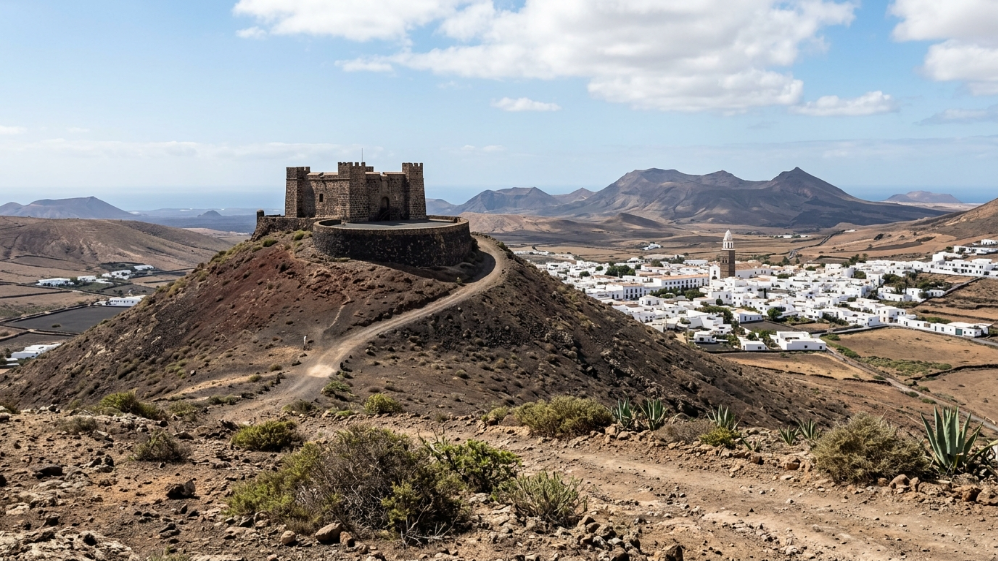
Perched atop the Guanapay volcano, looking down over the town. This is where lookouts watched the sea: when a suspicious sail appeared, there was just enough time for people to hide. Today it houses the Museo de la Piratería, and the view from the top is one of the best in the centre of the island — you can see half of Lanzarote in one go.
even if you skip the museum, go up for the views. And wear normal shoes.
Casa-Museo del Timple
The timple is that tiny five-stringed Canarian instrument you hear at every fiesta on the islands. And Teguise is its birthplace. The museum, inside Palacio Spínola, tells the story of the instrument, the noble house and the local music all at once. It's small, it's cheap, and it's one of those visits you don't expect to love — but do.
The Sunday market
Every Sunday, roughly from 9am to 2pm, the entire old town fills up with stalls. It's Lanzarote's most famous market and one of the biggest in the Canaries: crafts, aloe vera, cheeses, mojos, jewellery, clothes… and live music in the streets, with parrandas (folk music groups) and timples.
it's a very touristy market. Among the local craft stalls there's plenty of imported stuff that looks suspiciously like what you'd find at any market fair back home. But the atmosphere is worth the trip: it's the day the town comes alive.
How to do it right:
- Go early, around 9.30-10am. By midday it's a sea of people.
- Parking is the problem, not the market. Coaches arrive from all over the island. Park further out on the edge of town and walk in: it'll take you less time than hunting for a space.
- Look out for what's actually local: goat's cheese, mojos, aloe, sea salt, embroidery. You can find the rest back home.
- Stick around for the music. It's the best part and it's free.
- And don't leave at 2pm: once the stalls pack up, the town empties out, gorgeous and silent. That hour is the best of the whole Sunday.
if you're after something smaller and more authentic, the Saturday market in Haría is a different league. Haría and the green north »
When to go: Sunday or a weekday?
This is the real decision, and it depends on what you're after:
Sunday (market) Weekday
AtmosphereFestive, music, crowdsTotal silenceThe townYou can't see it — hidden by the stallsYou see it in fullParkingA nightmareEasy and freePhotosTrickyPerfectEatingBusy, book aheadRelaxed
if it's your only visit, go on Sunday — the market is an experience in itself, and you'll still get a feel for the town underneath it all. If you've got a few days, go both times: they're two different places that just happen to share a name.
What's nearby
- Jardín de Cactus (Guatiza, 10 min): Manrique's last work. César Manrique and his works »
- Famara (20 min): the endless beach beneath the cliff. Guaranteed sunset. The best beaches in Lanzarote »
- Costa Teguise (10 min): beaches and amenities. Part of the same municipality.
- Haría and the green north (20 min).
market in the morning → lunch in town → Famara in the afternoon → sunset on the cliff. The perfect 3-day itinerary »
And yes, you need a car. Although on Sundays there are special guaguas (buses) to the market from the tourist resorts: it's one of the very few trips that public transport actually sorts out for you. Getting around Lanzarote »
Where to eat in Teguise
The old town has restaurants with patios and terraces tucked inside old mansions, and it's one of the best places on the island to eat Canarian cuisine — no sea views, but centuries of history all around instead: grilled cheese, goat meat, sancocho (salted fish stew).
On Sundays, book ahead or get there early. On weekdays, you'll have the town to yourself.
Frequently asked questions
When is the Teguise market?
Is the Teguise market worth it?
What is there to see in Teguise besides the market?
How long does it take to see Teguise?
Why isn't Teguise on the coast?
Why did it stop being the capital?
Where does the name come from?
Teguise is the one place in Lanzarote where the island doesn't talk about volcanoes. It talks about fear, about centuries spent watching the horizon for a sail, about people hiding underground while their homes burned above.
And then Sunday comes round, and a timple starts playing in the square. Three hundred years on, the town that once lived in hiding is the one that pulls in the biggest crowds on the whole island.