Two days. One car. One driver who doesn't drink.
This is the route that makes you understand Lanzarote through your mouth: why the wine grows in a hole in the ground, why the potatoes are boiled in seawater, why the best smoked salmon in the Canaries comes from a village with no sea, and why locals eat where people used to watch telly.
This isn't a list of restaurants: it's a journey. You pick the names; we set the order.
The golden rule: someone drives and doesn't taste. Wine at lunchtime is completely normal here, and this island's wine goes down very easily.
 Day 1 · The south: fire, wine and sea
9:00 · Breakfast the local way
Coffee with milk and toast with tomato and olive oil at a village bar. If you're feeling brave, order a barraquito: coffee, condensed milk, liqueur, cinnamon and lemon, layered. At 9am it's excessive. Do it anyway.
10:00 · The market
the Teguise market, the island's most famous. Amid the tourist tat, there's the good stuff: goat's cheese, mojos (traditional Canarian sauces), Janubio sea salt, aloe vera, jams. Get there early and buy what you'll take home right there. Saturday: the one in Haría, smaller and more genuine. If you can choose, pick this one.
12:00 · La Geria: understanding the wine
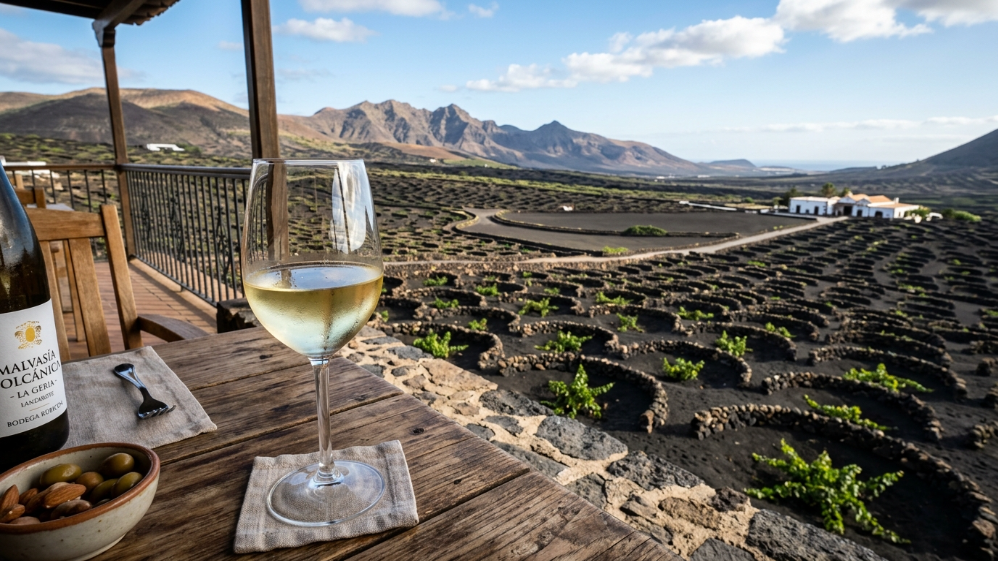
You head down the LZ-30 and a landscape unlike anywhere else appears: thousands of pits dug into volcanic ash, each one holding a vine and its own crescent-shaped stone wall.
Visit one winery (not three) and take your time tasting. Ask for dry volcanic malvasía and, if they have it, a carbonic maceration red — that's the one that'll surprise anyone who thinks they've tried it all.
14:00 · Lunch among the vines
Several wineries have restaurants overlooking the valley. Eating there, with Timanfaya in the background and a glass of the wine you've just watched being born, is one of the best things you can do on this island.
grilled cheese with mojo, papas arrugadas (wrinkled potatoes), goat meat.
16:30 · Uga: the impossible salmon
An inland village, in the middle of a volcanic desert, with no sea and no rivers. And yet here you'll find one of the most famous salmon smokehouses in the Canaries, slow-smoked with local wood.
It's the perfect metaphor for this island: what shouldn't exist, does.
19:30 · El Golfo: fish and sunset
You head down to the west coast. El Golfo is a row of white houses facing the Atlantic, which crashes just ten metres from your table.
the catch of the day — parrotfish, wreckfish, sea bream — grilled, with potatoes and green mojo. And for dessert, bienmesabe (a local almond dessert).
at sunset. Book ahead.
Day 2 · The north and the capital
9:30 · Coffee in a square
The square in Haría, under the Indian laurel trees. There's no plan here: just shade, coffee and silence. Exactly what you need after Day 1.
11:00 · The north coast
Punta Mujeres, Arrieta, Órzola: proper fishing villages. There's no menu here: there's whatever came in that morning.
If it's too early for lunch, have beer and limpets on a terrace overlooking the water. And if it's on offer, octopus.
14:00 · The teleclub: the final test
Head inland, to a village bar or a teleclub — those venues set up under Franco's regime so villagers could watch telly, which ended up becoming the village pub.
stewed goat meat, rabbit in salmorejo sauce, potaje (a hearty stew). Set lunch menu for €10-12. Fluorescent lights, telly on, and nobody's trying to impress you.
This is where you'll find the real food on this island.
18:00 · Gofio, the oldest of them all
Before you finish, try gofio (roasted grain flour). As escaldado, mixed with fish broth and raw onion, or as a dessert, or as ice cream.
It's toasted grain flour, and it's what the majos (the island's original inhabitants) ate here a thousand years ago, before Spain even existed. It's still on the menus. There's nothing older you can try anywhere in Europe.
21:00 · Tapas at Charco de San Ginés
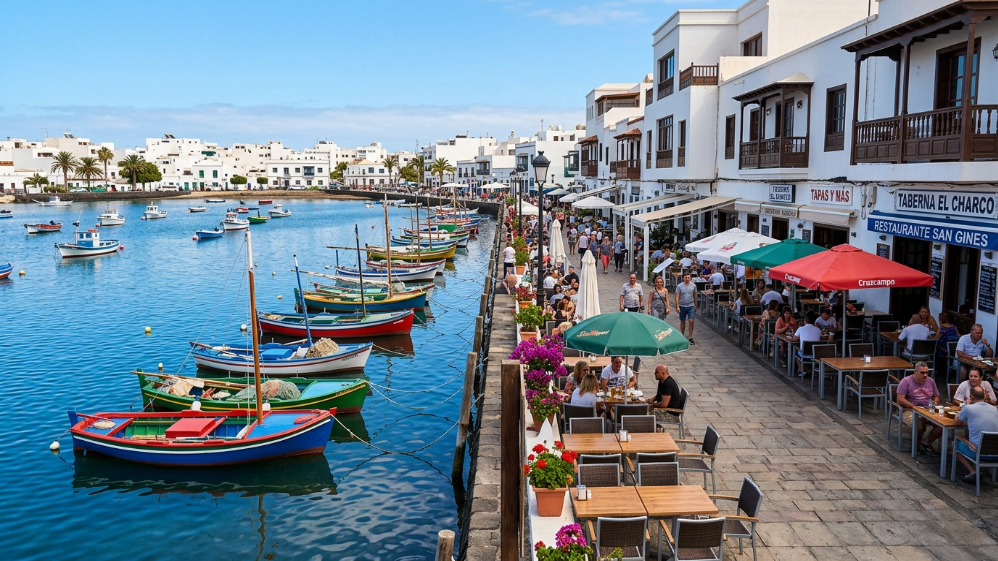
Finish up in Arrecife. A lagoon of seawater right in the heart of the capital, surrounded by little fishermen's houses and colourful boats, with the lights reflecting on the water.
This is where the people who live on the island go out for dinner. Tapas, octopus, fish croquettes, grilled cheese, local wine. And a barraquito to close these 48 hours the way you opened them.
 What to bring home
What Where
Volcanic malvasíaA La Geria wineryMojo (red and green)Market or supermarketJanubio sea saltMarketCured goat's cheeseTeguise or Haría marketGofioSupermarket, and it'll impress everyone back homeSmoked salmonUga
*Everything clears airport security if checked in. And with IGIC at 7%, it works out cheaper than back on the mainland.*
Frequently asked questions
Can you do this route without a car?
Which day should I start on?
How much does it cost?
What shouldn't I skip?
What if I'm vegetarian?
Is it worth it in winter?
The places
This route tells you the order, the area and what to order. The names — which winery, which terrace, which teleclub — we're gathering together in LanzaEat, our directory of the island's restaurants, bars and places to eat.
In 48 hours you've drunk wine grown in a pit of ash, eaten potatoes boiled in seawater, tasted a thousand-year-old toasted flour, and had dinner where the locals have dinner.
That's not a food route: it's the island's history, served on plates. An island that had no water, no soil, no rain, and still somehow managed to eat. And to eat well.
What would you add to these 48 hours? 👇