Lanzarote is like nowhere else. Here, the landscape was sculpted by fire: 300 volcanoes, fields of black lava, vineyards planted in ash, and a sea that crashes against cliffs in impossible colours. And over all of it, the hand of an artist, César Manrique, who turned a poor island into an open-air work of art.
If you're wondering what to see in Lanzarote, this guide is your starting point. We've put together the 15 unmissable places on the island, with what makes each one special and a practical tip for your visit. From the living volcano of Timanfaya to the hidden coves of Papagayo, this is the essential map so you don't miss the best of it.
A tip before you start: Lanzarote's gems are scattered all over the island, and public transport only reaches a handful of them. With a hire car, you can see it all without any hassle. Find out more in our guide to getting around Lanzarote.
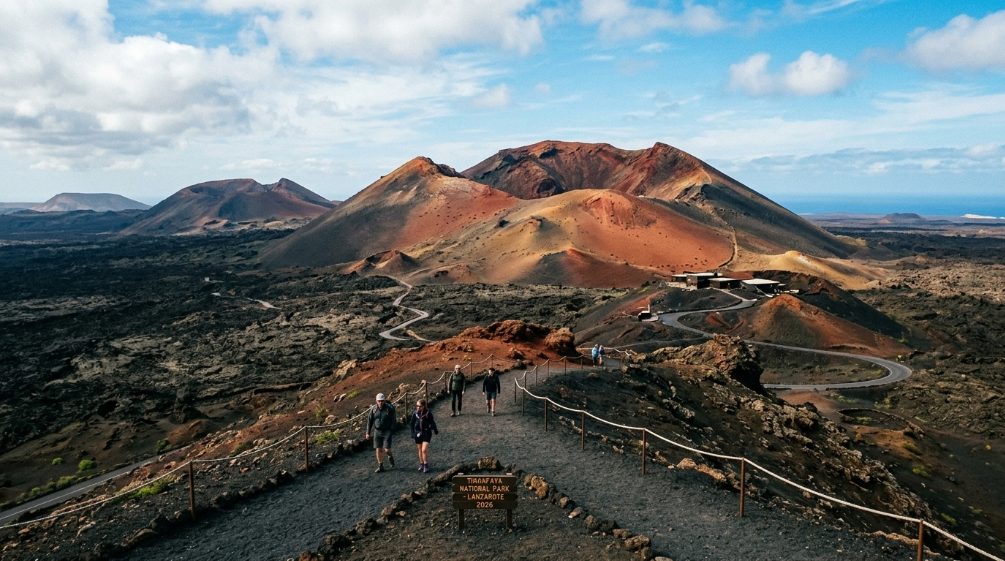
1. Timanfaya National Park
The volcanic heart of the island, and for many, the most jaw-dropping thing to see in Lanzarote. Between 1730 and 1736, an eruption lasting six years buried a third of the island under lava. Today you walk through a landscape that looks like it belongs on another planet: the Fire Mountains, in shades of red, ochre and black, where just metres below the surface temperatures exceed 600°C. The park rangers demonstrate this live, and at the El Diablo restaurant they cook using the volcano's own heat.
you visit by guided bus (the Route of the Volcanoes); go early to avoid the queues.
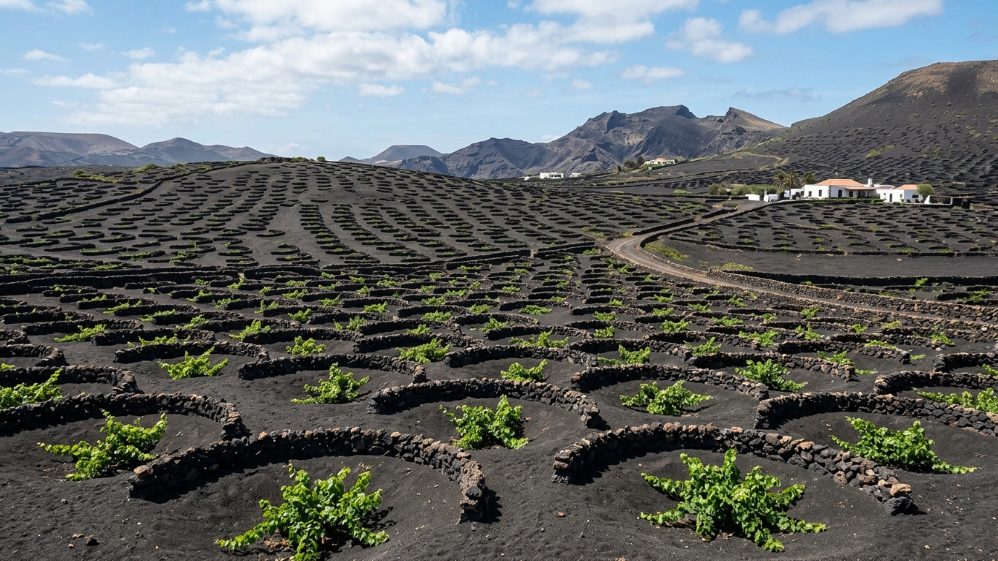
2. La Geria and the volcanic vineyards
A vineyard in the middle of an ash desert. In La Geria, each vine grows inside a cone-shaped pit dug into the picón (volcanic gravel) and protected by a crescent-shaped stone wall. The ash traps the night's humidity and feeds the plant with barely any rainfall. The result is Malvasía Volcánica, one of the most singular wines in the world. You can visit the wineries, taste the wines, and understand why this is called "heroic viticulture".
pair your visit with a meal; many of the island's restaurants have an excellent list of local wines.
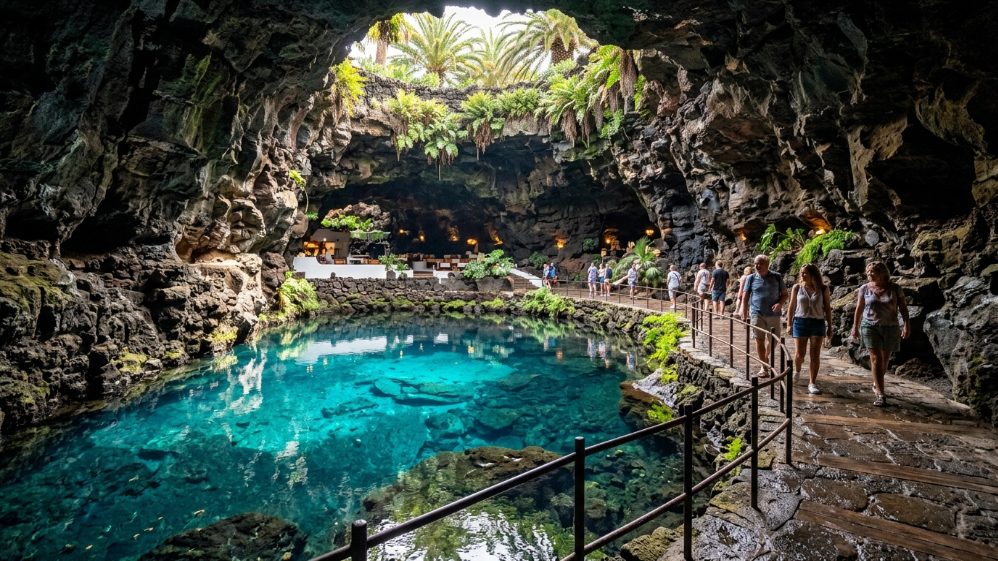
3. Jameos del Agua
César Manrique's masterpiece. Inside a lava tube formed by the La Corona volcano, Manrique designed a magical space where art, nature and architecture come together: a natural lake of turquoise water home to the jameíto, a tiny, blind, albino crab that exists nowhere else on the planet. There's also an auditorium with extraordinary acoustics.
it's one of the CACT sites (Centres for Art, Culture and Tourism); if you're planning to see several, the combined ticket is worth it.
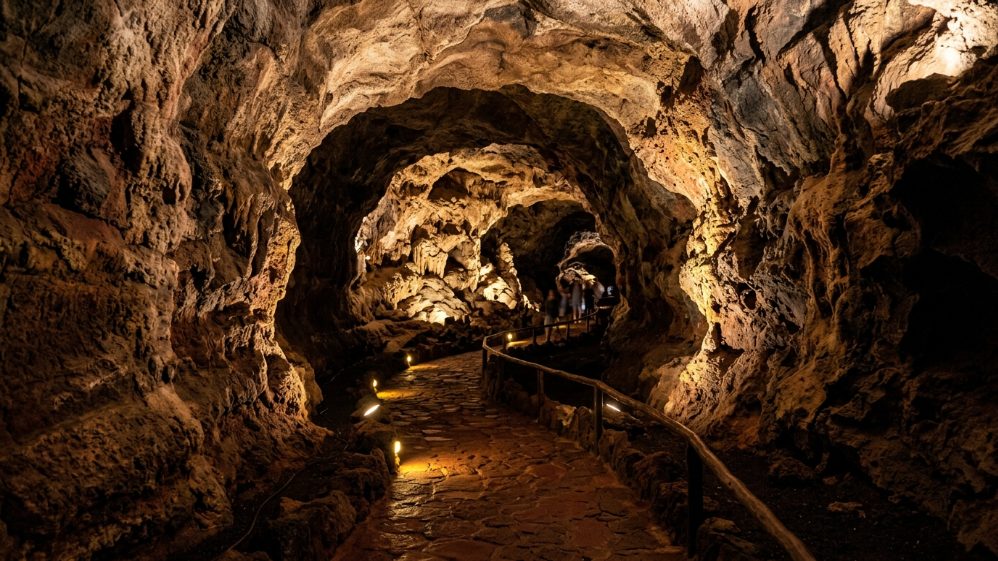
4. Cueva de los Verdes
Part of the same lava tube as the Jameos, but in a near-untouched state. You walk over a kilometre through underground galleries where locals once hid from pirates. At the end, a surprise we won't spoil for you: one of the most astonishing visual effects you'll see underground. The visit is guided, and the lighting is spectacular.
wear comfortable shoes and bring a light jacket; it gets chilly inside.
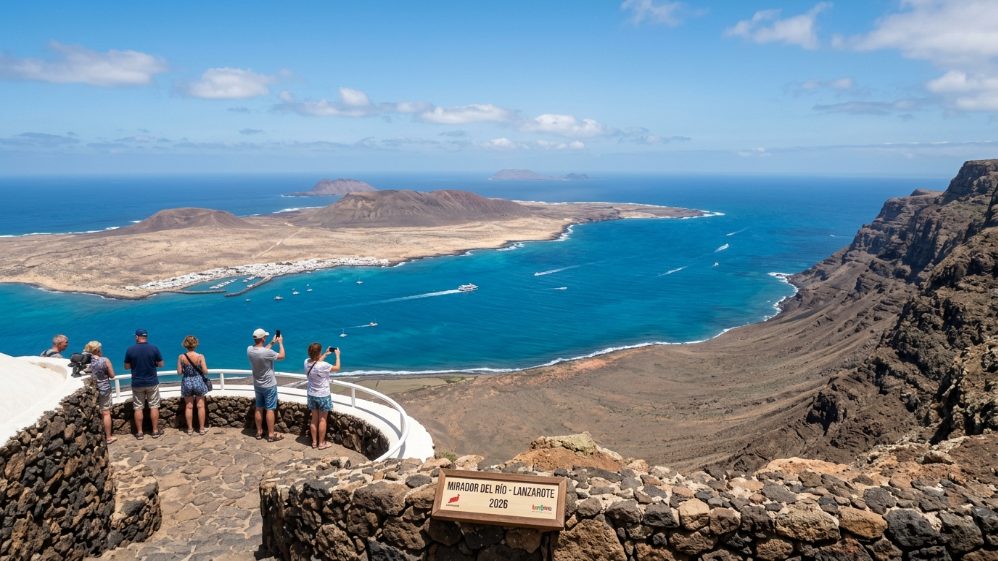
5. Mirador del Río
Perched on the edge of the Risco de Famara, almost 500 metres above the sea, this Manrique-designed viewpoint offers the best view on the island: the Chinijo archipelago and La Graciosa floating on a turquoise Atlantic. From outside you can barely spot it (Manrique built it into the rock); inside, huge windows frame the landscape like a painting.
go on a clear day; in misty weather it loses all its magic.
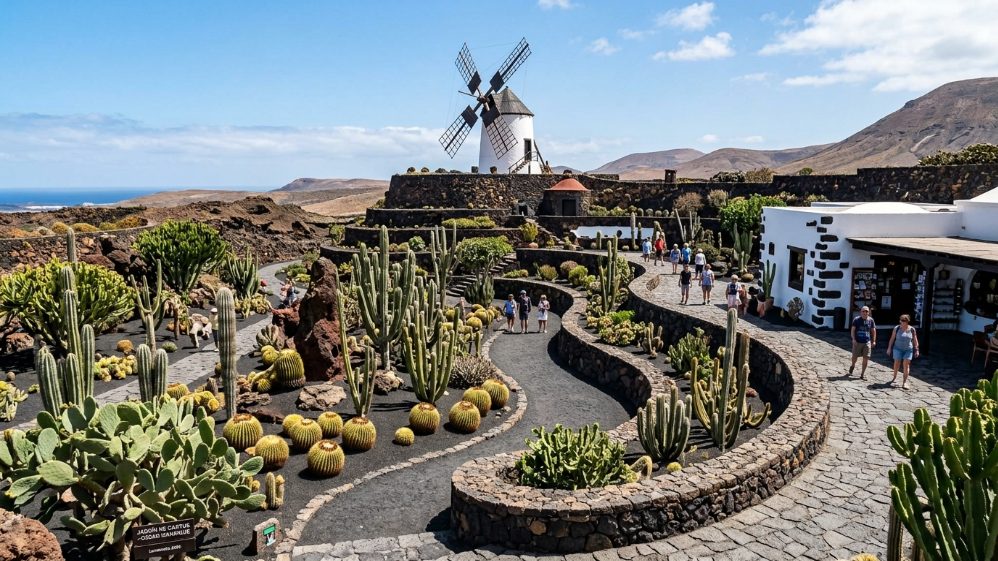
6. Jardín de Cactus
Manrique's last great work, built on an old picón quarry. A green amphitheatre with more than 4,500 cacti of hundreds of species from around the world, crowned by a restored windmill. It's a perfect example of the idea that guided all his work: intervening in the landscape without destroying it, but rather enhancing it.
late afternoon light is the loveliest for photos.
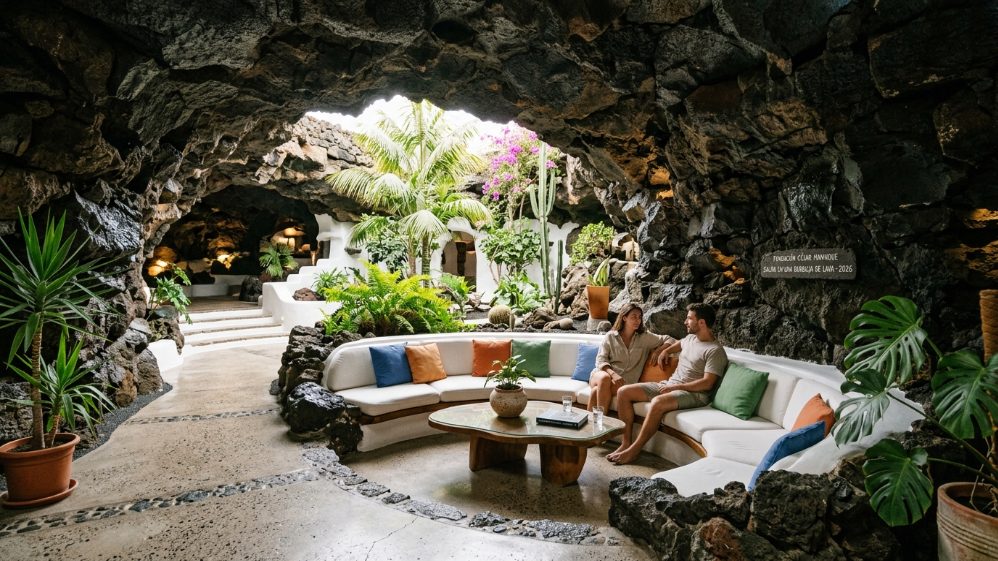
7. Fundación César Manrique
To understand Lanzarote, you have to understand Manrique, and there's no better place than his former home in Tahíche. It's built over volcanic bubbles: five volcanic chambers turned into rooms connected by tunnels, with a tree growing inside. Today it houses part of his work and explains his philosophy: art, nature and love for his homeland.
combine it with the Jardín de Cactus and the Jameos for a one-day "Manrique" route.
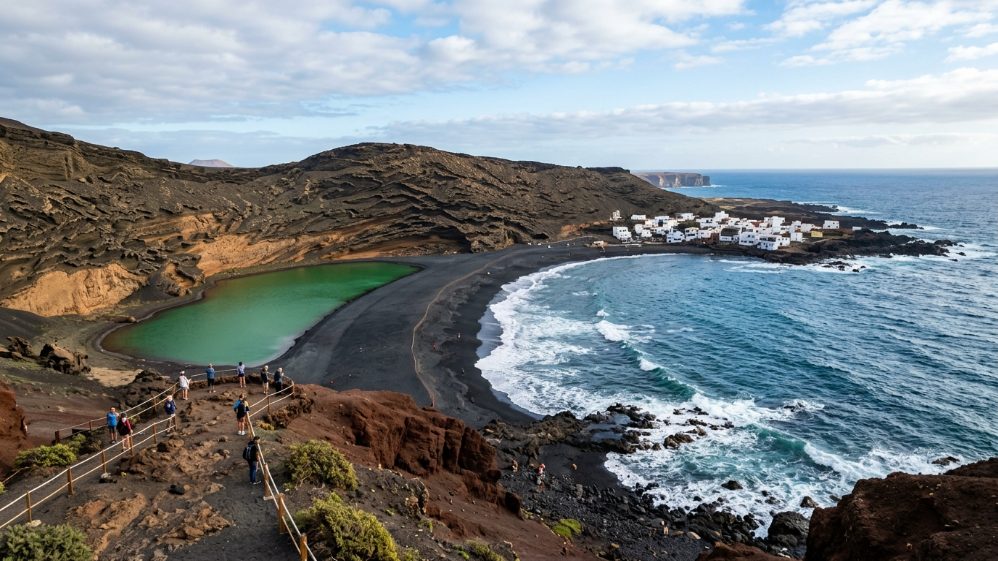
8. El Golfo and the Charco de los Clicos
One of the most photographed spots on the island. At the foot of a volcano half swallowed by the sea, an intensely green lagoon opens up, separated from the Atlantic by a black sand beach and framed by reddish cliffs. The colour comes from algae and volcanic minerals: it looks photoshopped, but it's real. Nearby, the fishing village of El Golfo is a must-stop for fresh fish.
the lagoon is admired from a viewpoint; you can't walk down to it.
9. Papagayo beaches
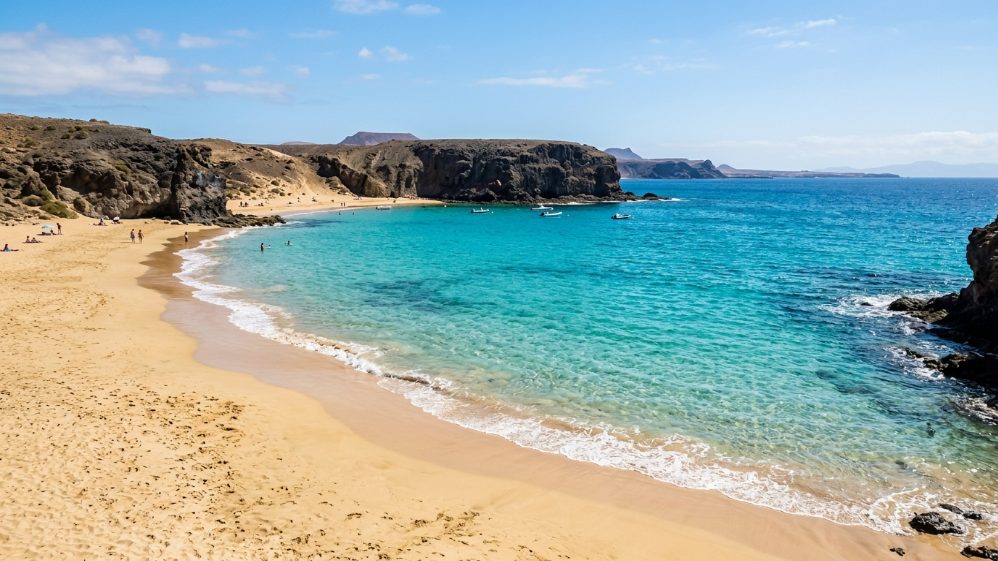
Lanzarote's golden-sand paradise. On the southern tip, within a protected natural area, a series of turquoise-water coves hide between cliffs: Papagayo, Playa Mujeres, Caleta del Congrio… No hotels, no promenades, just sand, cliff and the Atlantic. The perfect contrast to the volcanic black of the rest of the island.
you get there via a dirt track (there's a small access fee); bring water and food, as there are barely any facilities.
10. La Graciosa
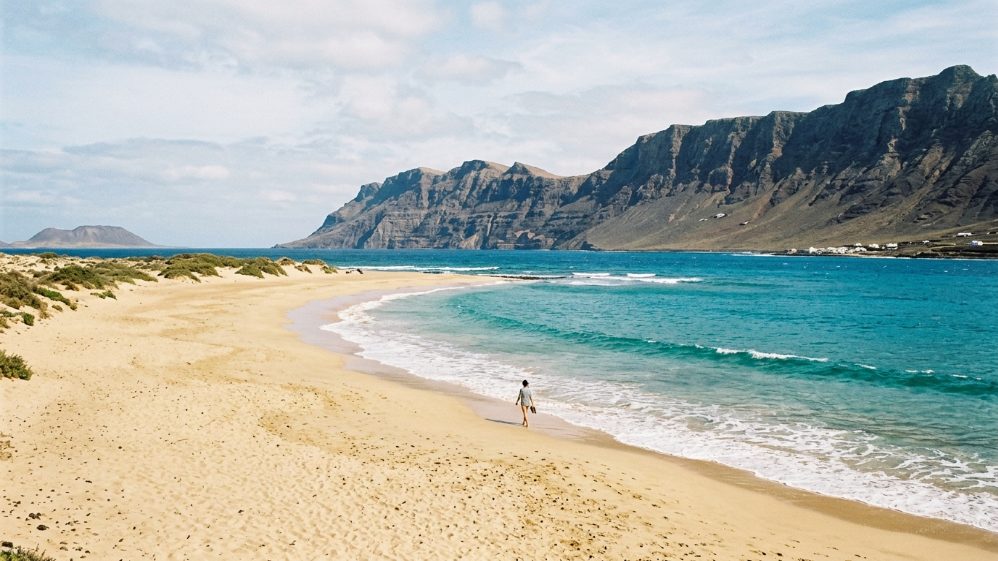
The "eighth Canary Island", just 25 minutes by ferry from northern Lanzarote. A world apart with no paved roads, with sandy streets, barely two villages, and some of the archipelago's most unspoilt beaches. You get around by bike or on foot, and it's the perfect day-trip escape from everything.
the ferry departs from Órzola; book a bike once you arrive in Caleta de Sebo if you want to reach the more distant beaches.
11. Teguise
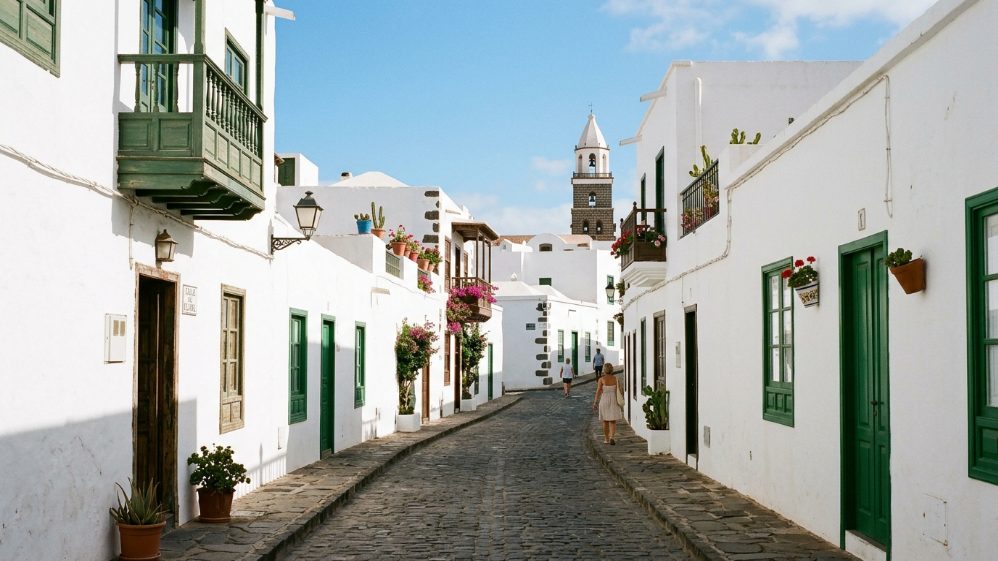
For almost 400 years it was Lanzarote's capital, and the most raided by pirates. Teguise, the noble old town, preserves churches, convents and white mansions from the days when the island feared Berber corsairs; beneath its streets there are still shelters where locals used to hide. Every Sunday it hosts the island's most famous market, with crafts, music and a great atmosphere.
if you can, visit on a Sunday morning for the market; on weekdays it's a quiet, gorgeous village.
12. Haría and the Valley of a Thousand Palms
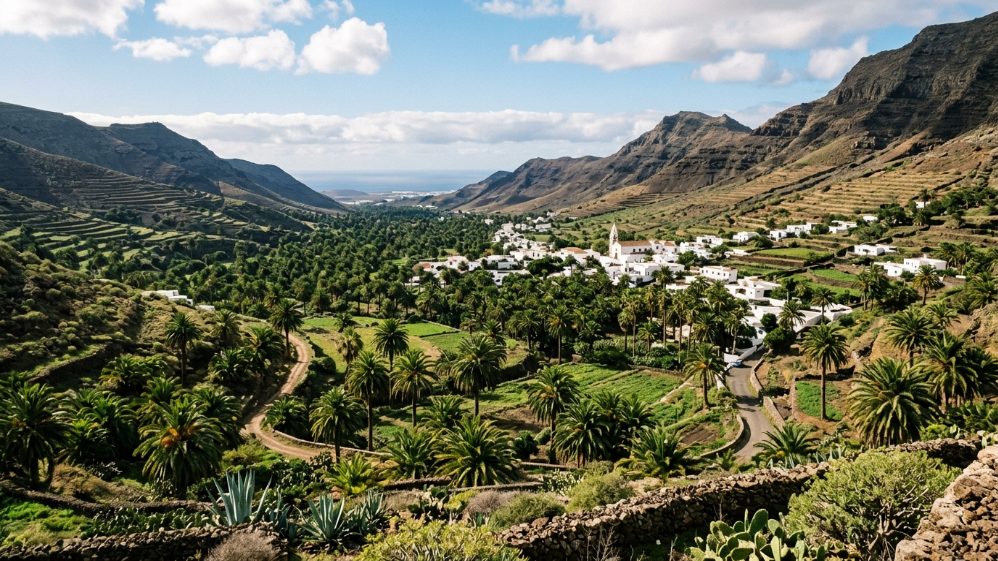
In the green north of the island, Haría shatters every cliché: where you expect ash, you find palm trees, orchards and silence. It's no coincidence that Manrique chose this village to spend his final years. Its valley, dotted with thousands of Canary palm trees, is one of the most surprising landscapes in Lanzarote.
there's a craft market on Saturdays, one of the most authentic on the island.
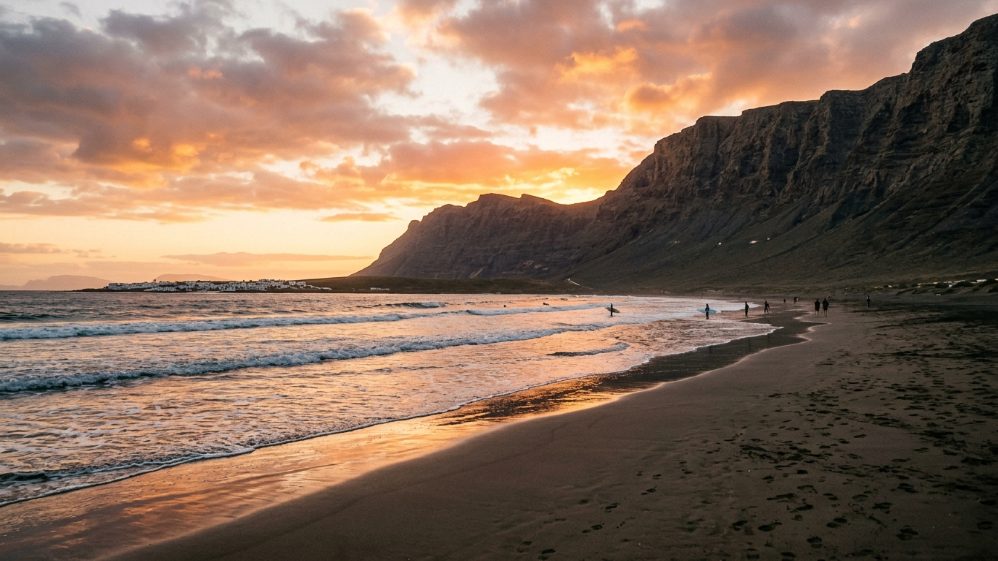
13. Playa de Famara
An endless golden sand beach at the foot of the towering Risco de Famara, a 600-metre cliff. It's the wildest, most spectacular beach on the island, the capital of surfing in Lanzarote, and one of the best spots to watch the sunset. The strong waves make it unsuitable for a calm swim, but it's pure force and beauty.
watch out for currents; it's better for walking, learning to surf with a school, and photography than for swimming.
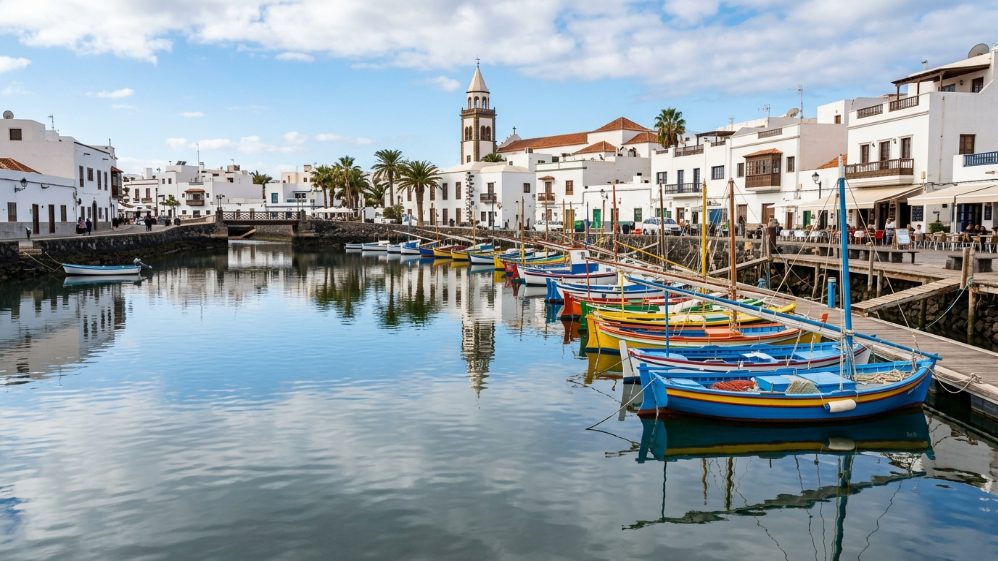
14. Charco de San Ginés (Arrecife)
The seafaring soul of the capital. The Charco de San Ginés is a seawater lagoon right in the middle of Arrecife, surrounded by whitewashed fishermen's cottages and colourful boats reflected in the water. A charming spot, perfect for a sunset stroll and tapas at its restaurants.
it's the best spot in Arrecife for a tapas dinner; find where in LanzaEat.
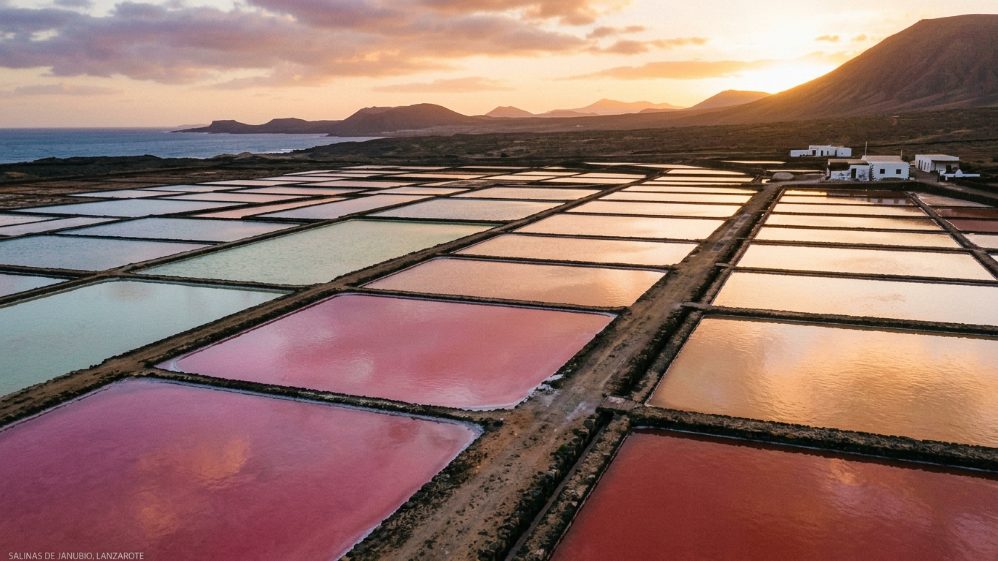
15. Salinas de Janubio
The largest salt flats in the Canaries and a spectacle of colour. A mosaic of pink, white and ochre pools where salt is still produced the traditional way, next to a black sand beach and a wild sea. At sunset, when the sun tints the water, it's one of the most photogenic spots in Lanzarote.
stop at the roadside viewpoint; that's where you get the best overall view.
Where to stay and eat to see it all?
With so many places scattered across the island, choosing where to stay carefully saves you kilometres and lets you enjoy it all more. At LanzaStay we bring together villas, rural houses, fincas and apartments with direct booking with the owner, so you can experience the island from the inside.
And when it comes to eating, from fresh fish right by the sea to the hidden guachinche (a rustic, family-run local eatery) where the locals eat, find the best spots at LanzaEat, our directory of restaurants, bars and guachinches in Lanzarote.
FAQs
How many days do I need to see Lanzarote?
Can you see Lanzarote without a car?
Which is the most impressive place?
When's the best time to visit Lanzarote?
These are the 15 essentials, but Lanzarote hides so much more: secret viewpoints, charming villages, age-old flavours and corners that never make it into the guidebooks. Every week we dig into them in depth on the blog.
Which of these 15 places would you put first on your list? 👇
Updated on July 16, 2026 · Published on July 14, 2026